
Academic role
Full Professor at the University “Magna Graecia” of Catanzaro, Department of Experimental and Clinical Medicine, in the field of Life Sciences, One Health, Veterinary Medicine.
Life Sciences · One Health · Veterinary Medicine
Full Professor of Veterinary Pharmacology and Toxicology at the University “Magna Graecia” of Catanzaro. My scientific activity studies the relationships between animal health, human health and the environment, with particular attention to the biological effects of pesticides and emerging contaminants (EDCs).
Profile
Full Professor at the University “Magna Graecia” of Catanzaro, Department of Experimental and Clinical Medicine, in the field of Life Sciences, One Health, Veterinary Medicine.
Experience in regulatory affairs, animal welfare assessment, veterinary medicines and the application of legislation on animal experimentation.
My scientific work focuses on the relationship between animal health, human health and the environment, with particular attention to emerging contaminants and systemic impacts.
Research
Strategic interests: veterinary and environmental toxicology, pesticide exposure, emerging contaminants, sentinel animals, food safety and risk assessment within a One Health framework.
Study of mechanisms of action, species-specific differences, safety of use and regulatory implications of veterinary medicinal products.
Analysis of the effects of antiparasitic and pesticide compounds on animals, ecosystems, non-target organisms and production chains.
Integrated approach to the study of PFAS, endocrine disruptors, antimicrobial resistance, environmental residues and chemical pressures in agro-livestock systems.
Translation of toxicological evidence into decision-making tools, risk management recommendations, labelling, authorisation and surveillance.
Teaching
A course designed to connect molecules, animal species, pharmacokinetics, pharmacodynamics and prescribing responsibility.
Continuing professional development
A documented selection of professional training aligned with the main research and professional areas: toxicology, One Health, environmental health, veterinary medicines, laboratory animal science, animal welfare and official controls. Selected training activities were subsequently completed again in updated editions to maintain alignment with scientific, regulatory and operational developments.
Publications
Articles and commentaries
A historical-documentary note on Augustus’ paternal origins, reconsidering the childhood cognomen Thurinus, Mark Antony’s invective on the pagus Thurinus, and the post-Hannibalic Thurian-Brettian context.
A note on the role of veterinary medicines as a point of connection between animal health, food safety, the environment and public health.
A reflection on the value of companion and farm animals as early indicators of chemical pressure in shared environments.
A brief note on the need to connect material chemistry, formulations, emerging contaminants and risk assessment.
Presentations and materials
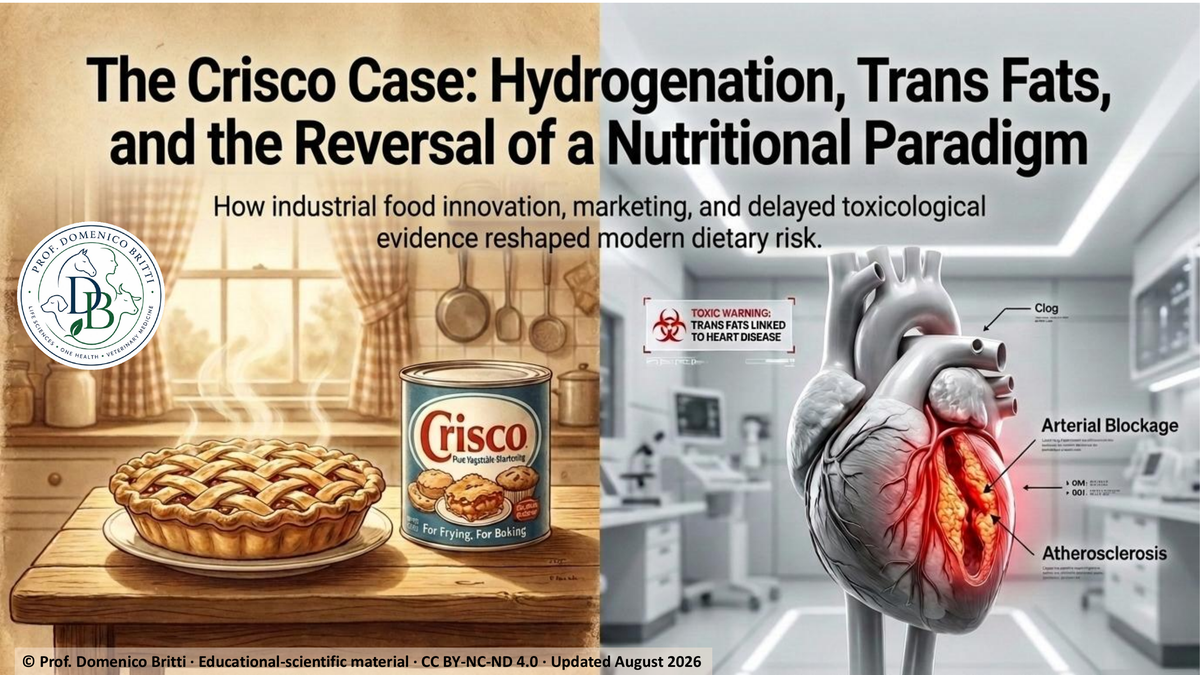
Educational-scientific material.
An English-language historical toxicology presentation on Crisco as a case study in industrial food innovation, marketing, trans fats, delayed cardiovascular-risk recognition and the reversal of a nutritional paradigm.
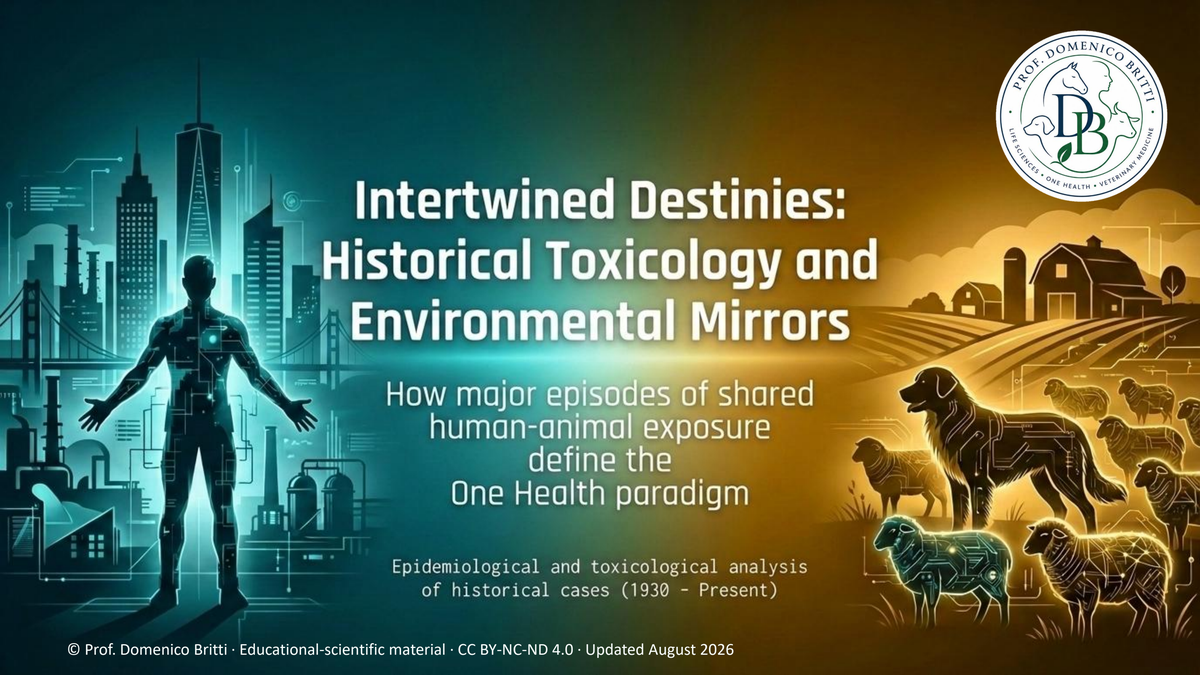
Educational-scientific material.
An English-language presentation using historical toxicological case files to examine shared human-animal exposure, from the Michigan PBB disaster to TOCP poisoning in Morocco, lead exposure and chemical incidents, with focus on animal sentinels, veterinary clinical databases and environmental surveillance.
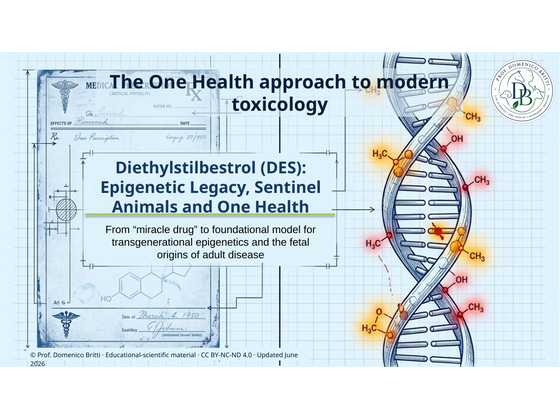
Educational-scientific material.
An English-language lecture on DES as a historical model of endocrine disruption, epigenetic inheritance and the fetal origins of adult disease, with focus on sentinel animals, CD-1 mouse models, obesogenesis, xenoestrogens, indoor contaminants, canine TDS, ZEA and the One Health perspective.
Educational-scientific material.
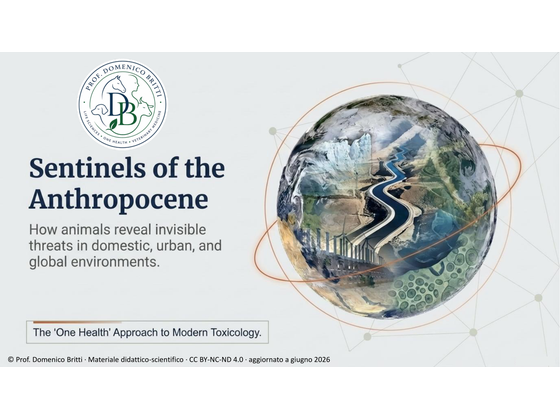
A presentation on animals as biological sentinels of environmental exposure in domestic, urban and global ecosystems, with focus on pesticides, persistent contaminants, bioaccumulation, cocktail effects, EDCs, PFAS, co-selection and One Health toxicology.
Popular-science presentation.
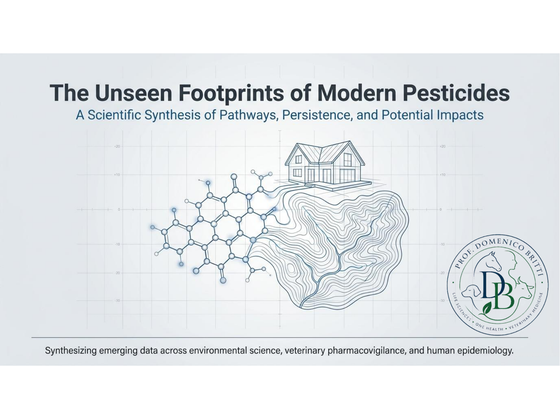
A scientific synthesis of modern pesticide exposure pathways, focusing on indoor persistence, the pet pathway, veterinary pharmacovigilance, PFAS, so-called inert ingredients and risk-based pest management.
Popular-science presentation.
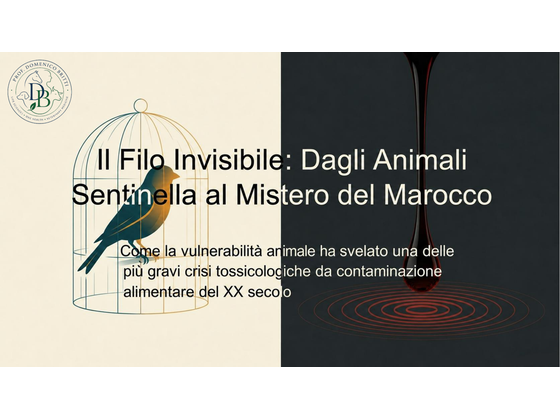
A One Health reading of sentinel animals as early indicators of shared environmental exposures, starting from the historical case of contaminated cooking oil poisoning in Morocco.
Popular-science presentation.
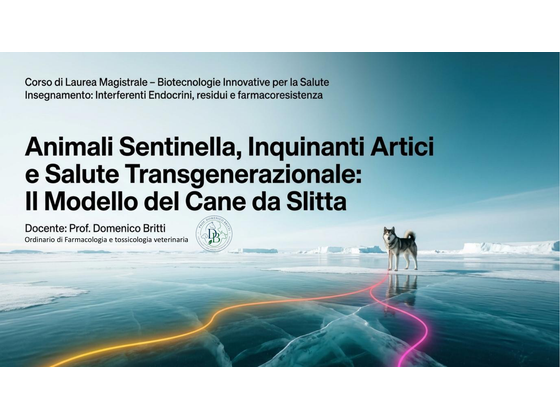
A One Health reading of sled dogs as sentinel models for Arctic contaminants, organohalogen pollutants, endocrine disruptors, transgenerational health, biomarkers and risk assessment.
Popular-science presentation.
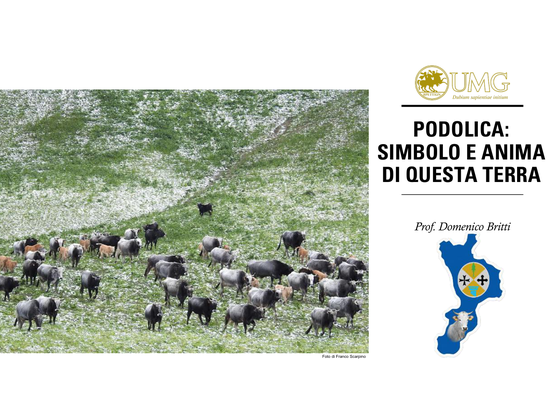
A cultural, zootechnical and territorial reading of the Calabro-Lucanian Podolica cattle, across archaeology, Magna Graecia, transhumance, animal welfare, biodiversity and the identity of inland areas.
Public engagement
Participation in scientific, institutional and territorial initiatives focused on native breeds, animal biodiversity, sustainable livestock systems, transhumance and the role of animals as biological, cultural and environmental heritage.
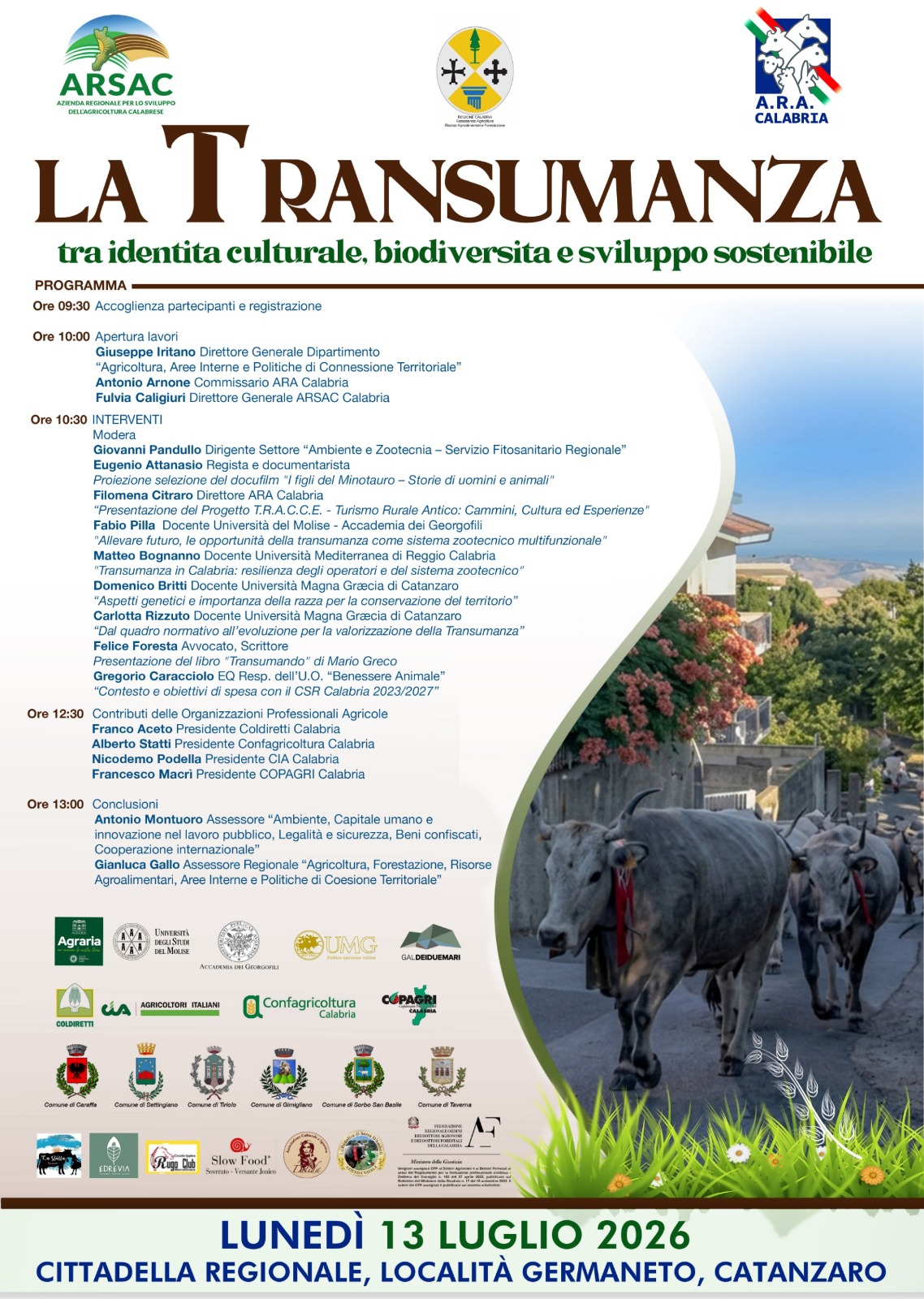
Talk: Genetic aspects and the importance of the breed for territorial conservation.
Focus: transhumance, Podolica cattle, biodiversity, sustainable development, cultural identity and territorial livestock systems.
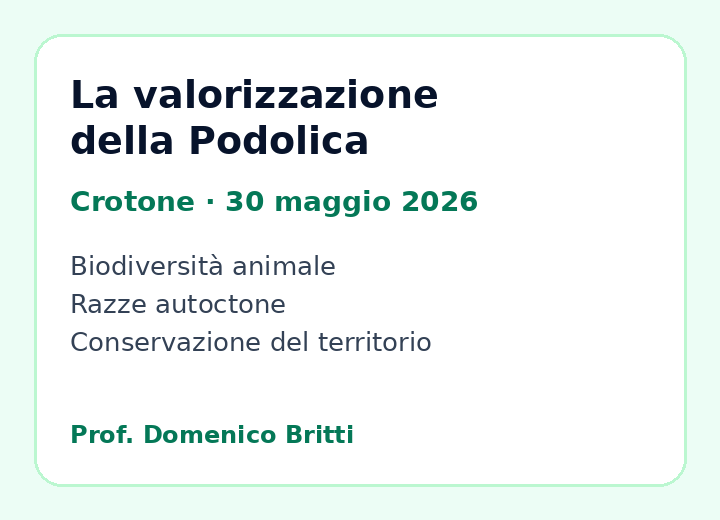
An initiative dedicated to Calabrian Podolica cattle, with academic, institutional and agricultural-sector contributions.
The programme lists Prof. Domenico Britti among the speakers.
Projects
Management models that reduce the dispersion of chemical substances in pastures and enhance the health, environmental and nutritional quality of products.
Initiatives devoted to the relationship between parasitism, animal welfare, biodiversity, environmental residues and the sustainability of livestock systems.
Educational and cultural pathways oriented to veterinary medicine as a tool for cooperation, care for creation and dialogue among countries.
Contact
For scientific collaborations, seminars, interdisciplinary projects and initiatives in veterinary pharmacology, environmental toxicology and One Health.